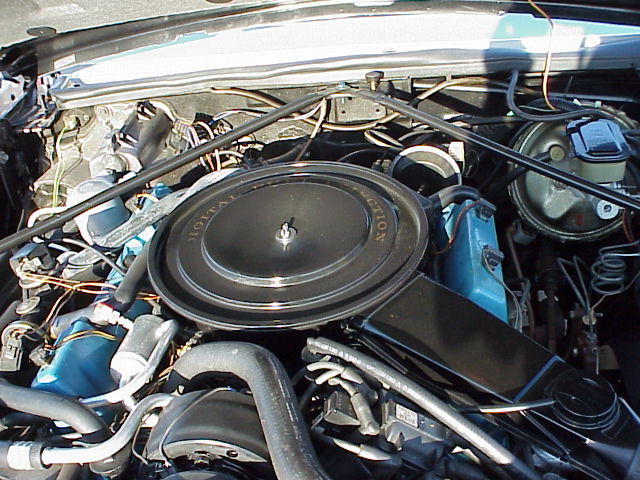
1981 Cadillac L-62 6.0 Liter 8-6-4 368 CID Engine
Information Page

Click here for My Cadillac Home Page
You can email me at Cadillacman@mcsmk8.com
 Cadillac
Technology
Cadillac
Technology 8-6-4 Information
This page is an information page that should help educate the confused on what the Cadillac 8-6-4 engine is and ease the misnomers that you may have been told buy the unknowing. What many people have heard to be a bad engine could be simple misinformation. In a sense, Cadillac dealers and salespeople actually used the 8-6-4 name to sort of cover up, what is to date, the worst engine in Cadillac history. The HT4100. Whether this was accidental or on purpose depended on the motives of the day. Since the 8-6-4 was only one year of 1981, and the HT4100 was 1982-85 to meet EPA fuel requirements (CAFE numbers), many people got and still get the two confused. The 8-6-4 = Decent Motor... The HT4100 = Not so Decent Compared. The 8-6-4 was also carried on until 1984 too, but only in Commercial Chassis/factory limos. These were good cars and rare too! Funny you don't see a 4100 in a commercial car, so you have your answer right there..... The rest of the consumer Broughams in 82-85 had HT4100s or the other disaster... the diesel.
The 6.0 8-6-4 and the HT4100 are nothing alike in any manner, nor is the drive train behind the motors. One is great, the other is really not good at all. The 8-6-4 is a big block Cadillac motor with 6.0 liters based on a proven platform that has set high mileage and reliability records. The 8-6-4 has been known to turn odometers well past 500K miles with no major failures. The HT4100 is a tiny aluminum block 4.1 liter motor with cast iron heads (really??) It had very little power, even less torque, with a small transmission (that failed too) and tiny differential behind it. In other words, if you wanted to change an HT4100 to a better motor, it goes much deeper than just the motor. Way deeper. The HT4100 was used from 1982-1985 and it often failed before 20K miles in its first years. By 1985, the motors general reliability issues had been somewhat corrected, but it was still a very anemic engine even if you never had to open the hood for 100K miles. It was so bad that Cadillac stopped production after 1985 and had to resort to Oldsmobile engines as a last resort over stopping production entirely. By mid 83, the line up of less than a year old new cadillacs with HT4100s needing motor replacements (AFA Warranty) at the dealer had never been seen before, or ever again. Then combine this motor having to be replaced at the same time the Diesel engine was failing constantly too... It was a mess never before seen. It was Cadillac's darkest hour. This is why you see the Olds 307 4BBL engines in the 86-89 Broughams. They did not want to do this, they HAD to do this and it was the only engine made that would work at the time.
The HT4100 still carries a underlying stigma today in the name Cadillac itself, but that stigma is often confused or pushed off to the 8-6-4 by mistake, or even on purpose. “Blame it on the 8-6-4, it’s better than the truth!” It is also a common known fact, that during the HT4100 years, more devoted Cadillac buyers switched over the Mercedes and BMW, thus paving the way for the incredible German car market in the US Today. If you like your German car today, you can give the HT4100 a little credit to helping drive German car sales to high profits and on to better engineering as they are today. The old time Cadillac buyers that traded cars every few years from the 50-60s-70s and liked the new car they bought, simply stopped doing so when they got their hands on a god forsaken 82. That is enough to drive anyone away. Going from an 81 to an 82 is enough to piss off Mother Theresa. Cadillac would have been better putting these buyers in 2-3 year old models all day long. They were much better cars. Lots went to Mercedes/BMW, but those that were dedicated actually stuck with the older models and kept using them. Lots of 81s provided great and long life service. I was one that drove an 8-6-4 to over 200K in the 80s early 90s and then sold it off. It is going today....The guy I sold it to stopped counting when the odo broke about the 5th roll over, 500K... that was years ago too... it still goes. Not much left of it, but the motor runs. At that point I got a 90 when the 5.7 came out and purposely skipped over all those 82-89s. Lots of people in the know did the same things. The 5.7 actually is not as good of engine as the 6.0 in terms of long service life, but its EFI had been refined, it had more power and the 4 speed 700R4 trans too (not to be confused with the Metric 200). It was good enough and 40 miles better than the 4100, and a huge power improvement over the decently reliable 5.0. So in other words, it took from 82-90 to get about back where they left of in 1981.
As said, the 8-6-4 engine was only produced for one year, but is based 100% on the time proven Cadillac “worlds largest” engine family, the Cadillac 500/472/425/368 family. In 1981 the 8-6-4 was engineered out of the existing big block platform as Cadillac was against the wall to do something about gas mileage. While other companies’ cratered and simply put tiny engines in big cars to band aid the CAFE requirements, Cadillac had a different approach. Low to pathetic power was not an option on the 1981 Cadillac, although in 1982 they unfortunately got it worse than just about anyone with the HT4100. A Fully loaded 82 Cadillac with an HT4100 had about the same power to weight ratio as a chevette... sorry actually worse, a diesel chevette. A modest fully loaded 18 wheeler would run off and leave it, especially on a hill in the mountains. I remember being passed by a U haul in an 83. I was rolling it down into second and revving the tar out of it while the U-Haul eased on by never knowing I was blowing the tar out of my "cadillac" to go nowhere just to attempt to keep him from passing me. Now the 140HP the 8-6-4 engine made was no prize compared to a 500CID of 1970, but its torque was still excellent compared to any other car of that year and certainly not an embarrassment like the HT4100. The 140HP was also rated at 3800RPM, thus telling the knowing world, the motor is underrated, and it was. In reality, the 6.0 liter Cadillac engine was the only and last big block engine put in a passenger car past 1979. As mentioned, all the other GM names had very small engines tugging very large cars at this time. It really was quite sad. But as the best of the year, the Cadillac of 1981 had a TH400 transmission that was indestructible, a 12 bolt rear diff and a big block engine. No other car can say this for 1981, and not many can say that at all. As a whole, it was a carry over of very heavy duty early 70’s muscle car type hardware, mated with some modern electronic. That is what comprised the 8-6-4.
Since the 8-6-4 was a detuned big block cadillac, it made for a motor that could really outlast time itself, just like the 500/425 engines. If you see a car with an 8-6-4 badge, chances are its still the original motor no matter what the miles. Many today have seen well over 500K miles with nothing but water pump changes and basic repairs. The motors usually outlast the cars in most every case. See one in a wrecking yard, I bet the motor still runs with some minor repairs. Cadillac’s problem with the 8-6-4 was that it still did not meet CAFE requirements for fuel economy for the year 1982 and had to be dropped as there was no way it was going to do it. Get fined or sell crap.... The auto makers chose to sell crap at the hands of our governments threats. On that subject, I dare see a comparison to 1985 vs today in average fuel economy of the US fleet. I would say that 1985 was better as the 12MPG SUV craze was not rampant then..... so how far have we actually come on fuel economy as a nations fleet?. Today's cars are much heavier and larger than cars of the 80s too.
The HT4100 was the only replacement Cadillac had, and it was actually built to be FWD engine for a smaller car platform of future years and was brought to the table too fast and ahead of its time. This was the big mistake as the HT4100 might have been a good engine in a very small front wheel drive car, but it had no business in a full size RWD Fleetwood, especially in a first year design It was a disaster waiting to happen and it did. The HT4100 was however somewhat tolerable by the time it was put in the 84-85 FWD Seville and Eldorado. These are light cars actually (lighter than a new 3 series BMW) and the 84-85 versions were better than the 82-83s. In the Brougham, the low power and extra low torque of the small HT4100 caused the driver to literally have to floor the car in normal driving modes just to pace traffic. It is dangerous to drive actually in my opinion as you have no overhead of power to avoid adverse situations. On the HT4100 cars, the throttle positioning was adjusted to give the car a lot of accelerator push with very little foot movement. This gave the car an appearance of instant power and was great for a conservative test drive (a cheat), but when you finally put your foot all the way down, no more power was made and the motor revved itself to death going nowhere with the transmission shift points changed due to the floored accelerator position. The fact that the HT4100 was a first generation aluminum block motor, put it ahead in design and much was learned, but the fact it was so small is such a big car, it tore itself up as it was overworked all the time. The HT4100 usually failed a rod bearing, flattened cams, or had a serious cooling leak issue into the crankcase and prompted an entire engine replacement, not just a little sensor or something petty as the 8-6-4 might have had wrong with it.
What made the 8-6-4 different over the 500/425/368 was it had deactivating cylinders. Deactivating cylinders are common today on hyped modern “hemi” engines and GMs newer DOD (displacement on demand engine). This variable displacement was done by electronic solenoids on the valves along with different fuel mapping when in 6cyl or 4cyl mode to give the car better economy. The system was an add-on to the big block engine, but not as good as the time proven engine itself. Although very reliable, it was rather annoying to drive when it kicked in to the lesser cylinder mode. Especially the 6 cyl mode as it vibrated.. and they all did that. But it was no where near as annoying is trying to get on the highway with an HT4100 full of passengers, but variable displacement was something that the world was not ready for and unfortunately since it was only one year, not much else was researched with a pretty good engine to develop on.
As a whole, the 8-6-4 motor got decent fuel economy in cruise and still retained excellent power for the day and tons of torque that is barely rivaled today. It pulled hard when you wanted, and got decent economy when you wanted. Best of both worlds, but the economy was unfortunately not good enough to meet 82 CAFE requirements, thus the 8-6-4 was only one year. Had Cadillac kept the research going on that motor instead of the HT4100, Cadillac would probably have a little better name than it does, and German cars might have just be a novelty as they were in the early 80s.
The great thing about the 8-6-4 is that if you DO NOT want to use the 8-6-4 mode, one simple wire to unhook, and you have a fuel injected 6.0 liter engine all with great power all the time. When not used, the variable displacement hardware was nothing but a few extra pieces that did nothing and affected nothing in the way of reliability. Of course if you do not use it you do not get the added fuel economy of the deactivating cylinders and it was pretty much a 14MPG engine then. On the other hand, when compared to a pickup or Hummer of today, you are still better off with this engine. Many people (even dealers) put in a small switch to turn the variable displacement feature on and off. Its one wire that came off the transmission, and a simple on off switch inline gave you control of using your variable displacement or not. It is really good to have if you are on a trip and want to make it to the next town on low fuel. I took advantage of it all the time when I had one as a daily car.
If you are looking at a classic Cadillac to buy, one with a big block engine will provide the best drive train. The HT4100 will have the least power and the most problems, period. The 8-6-4 will last forever, but unlike the carbureted earlier counterparts, the 8-6-4 has throttle position sensors, idle actuators, map sensors, baro-sensors, O2 sensors and all of the things that a modern car today requires. Since this EFI technology was ahead of its time, people that did not understand it in those days, really just called it “crap” in their form of ignorance. They can be temperamental just from the lack of knowing what to do, but most problems with an 8-6-4 are very easy to fix. In reality the 8-6-4 engine is a great engine coupled to a great drive train and is one of the best years for the Cadillac Fleetwood cars. Yes I would rather still have a 4BBL carburetor on the engine for simplicity, but the 8-6-4 is what it is. A very early fuel injected big block. It was the change over year, but A LOT was put in these motors. They are far from junk. The two most common (misdiagnosed) running, idling and stumbling issues with the 8-6-4 are a worn TPI sensor (40 bucks) and a fuel pump that is not putting out what it should, thus causing erratic running and low power. Even 4100s suffer from weak fuel pumps too and are often misdiagnosed. Dealers will change everything under the hood, then after that start blaming it on the computer (that never fail) and the whole time it was the fuel pump... A bad fuel pump is is more from age, long term sitting with bad gas, etc, than a bad design now. Change these two things and most any 8-6-4 cadillac will run great again. Do not be afraid of it!
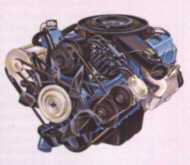
| The engine was a 6.0 litre,
368 cubic inch, V8-6-4
The engine was a 6.0 litre, 368 cubic inch, V8-6-4 fuel injected engine -4 fuel injected engine |
|
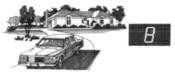
| As you leave your driveway, all 8 cylinders in your gasoline-powered 1981 Cadillac are in operation |
|
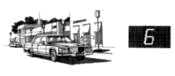
| Then, as you reach intermediate speeds on a street or avenue and your power requirements lessen, the car automatically switches to 6 cylinders |
|
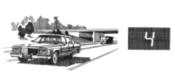
| And then, when you reach cruising speeds and your power needs decrease further, the car automatically switches to 4-cylinder operation |
|
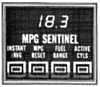
| A computer mounted on the dash indicates the number of cylinders being used |
|

Click here for My Car Hobby Home Page
You can email me at Cadillacman@mcsmk8.com